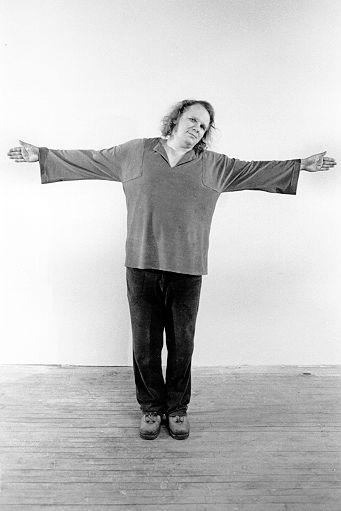
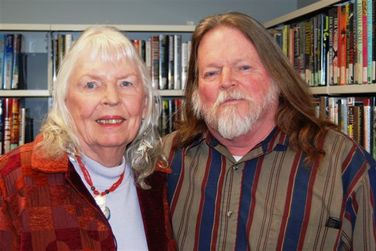
The following post is copied with permission from Ian Cutler's fascinating blog. This is just the first half of Ian's first posting on Jim Christy. Jim is a personal friend and the only writer I've met who's lived a more interesting life than I have - although our lives do have many parallels, including growing up in the U.S., resisting the Vietnam draft, tramping Europe in the 1960s & '70s, ending up in Canada and settling within a few miles of each other in Hasting County, Ontario.
Preamble
Having now written profiles on twelve tramp writers
born before the end of the nineteenth century—and
still not having exhausted the list—I've
decided to take a break from dead vagabonds and immerse myself in the life and
works of one who is still very much alive; in fact, only three years older than
myself.
But these are three very significant years. I was only
twelve years old in 1960, whereas Jim Christy was fifteen; old enough to be
actively involved in the counterculture of the early 60's, even though, as he
makes clear, 'I was never a hippie'.
Also old enough to have a memory of the jazz, bebop and Beat generation
that
preceded it, and which had a much more profound influence on Christy's
tastes
and style. They were three years also that meant one was old enough to
be
drafted to fight in the Vietnam War—of which
more later. As the 60s unfolded, I could only look on in envy and
admiration at
those emerging vagabond musicians and style gurus who were already at
the end
of their teens and entering their twenties: Dylan, Jagger, Hendrix, etc.
But having spent the last two years of the 60s in Africa, it was the
repetitive
rhythm of Congolese soukous and imported James Brown albums that intoxicated me. The latter preceding 60s rock and also passing
it by with his influence on the funk and hip-hop scenes that were already
emerging—such is the serendipity of popular culture. End of music digression.
I will, of course, return later to the Beats and other
vagabond writers of the first half of the twentieth century, such as Kerouac.
But I could not resist the opportunity of writing about a contemporary drifter;
all the more so because this time I am able to have a direct dialogue with the
object of my interest. So how did I come upon Jim Christy in the first place?
It is not as though this modern day vagabond is a household name. Regrettably,
although Christy has an impressive list of published books (29 to date), plus plays,
art exhibitions, travel, adventure, and yes, like seven of the Victorian
vagabond writers in this series, was a pugilist also; even in his adopted home
of Canada, he remains as obscure as many of those tramp writers born a century
earlier.
This
again raises a phenomenon I have discussed
previously. Those with no interest in the vacuity of celebrity, whose
energy is
focused on discovering the world at eye-level and beneath their feet
rather
than star-gazing; who may even deliberately exile themselves from
mainstream
society to find solace in the margins of 'civilisation', the odd, the
abject,
the quirky and the downright weird. In turn, such people are often
rejected by
'mainstream' society as weird themselves; a threat to everything that
makes
life safe and predictable (in Christy's case, this included his father's
disappointment that he dodged the Vietnam draft instead of doing the
patriotic thing, and deferred from following the family tradition of
becoming a gangster). Significantly, in terms of their writing, their
books also defy easy categorisation—even if Christy's work has been
compared to the 'hard boiled' genre credited to the earlier tramp
writer, Jim Tully.
This disregard of literary convention poses a challenge for publishers
and
booksellers alike: how to market their work and where to display them on
the shelves—as though that is the primary criteria for great
literature! But again, I digress. How did I stumble across this modern
day
literary vagabond?
Paradoxically, I was introduced to Christy by one of
the Victorian born tramp writers I referred to earlier. Well, not in person of
course, but during my research into Jim Phelan, I came across a
chronicle written by Christy of his
connection to Phelan. After Phelan's death in 1966, his third wife, Kathleen
Newton (who Phelan had tramped with for the last twenty years of his life),
allegedly travelled to Spain. Jim Christy is the last person to have reported
a sighting of Kathleen, nearly five years after Phelan's death. The tale
continues in Christy's own words:
'In early January, 1970, twenty-four years old, I
was on a ferry, traveling to Morocco from Spain. Most of the passengers appeared to be Arab, many in western
garb; the rest, or so it seemed, were young western men and women, hippies, in
other words. But walking the deck half an hour after boarding I saw a white
woman, older than the rest, and certainly no hippie. She had grey hair, a lined
face and to me, she was nearly ancient, fifty, at least. She must have seen me
look her way because a minute or so later a voice at my side said, “You look
different from the rest of them.”
“I could say the
same about you!”
She
smiled and told me her name was Kathleen and we began talking as if old friends who were continuing a
conversation we’d been having just the
other day.
After
a few minutes, she asked me what I did. I shrugged, told her I worked various
jobs. She nodded, and said, “Yes, but what do you want
to do?”
“Well I guess I
want to be a writer.”
She
nodded, as if she’d known it all along.
My
husband was a writer. He died a few years ago.”
“A real published
writer?”
Writers
were an exotic species to me.
“Yes, widely
published.”
“What was his
name?”
“You’ve probably
never heard of him, coming from North America. Jim Phelan”
“’Bell Wethers’.”
[short story by Phelan]
Her
eyebrows shot up in surprise, rearranging the deep lines in her face. Her eyes
which I remember as gray-blue seemed to sparkle.
“Yes, that’s Jim’s.” '
The young and the mature tramp fell into an immediate
bond of fellowship, 'by the time the boat docked, we might
have been the closest of friends.' And so it was that Jim Christy and Kathleen Phelan became
tramping partners for a few treasured weeks in Morocco:
'We avoided
Tangiers, tramping the roads and calling at small towns, and all along the way
people seemed drawn to her. I saw men who would ignore other foreigners,
approach her, smiling, and it was as if they wanted just to be in her presence.
People offered us rides on camels and in donkey carts. We had tea sitting in
the fields with shepherds. Men and children approached to tell her things. The
women regarded her from a polite distance.
[...]
We
stayed in other small towns, in lodging places that were unadvertised,
beautiful rooms behind unmarked doorways, rooms arranged around mosaic
courtyards with fountains. Our relationship was chaste, we took separate
quarters for five nights. On the sixth night, Kathleen came into my room and
asked if she could get in bed with me. She saw the question in my eyes and
answered it, “I don’t want
to seduce you. I just want to be close. I haven’t been held since Jim died, and
that’s nearly five years ago.
And so
we lay there and fell asleep in each other’s arms. And it was the same the
night after that.
Finally,
I felt I had to go on my separate way. I should have stayed with her.
I have often regretted going off. Before we parted, she gave me a pamphlet of
writings by Jim Phelan that she sold along the road to support her travels. She
inscribed it on the cover, to commemorate a meeting on the road in Morocco.' (UP)
How
Christy ends up on a boat to Morocco, and how he fulfils his ambition
of becoming a writer, is a long story. But first, his list of
literary achievements to date, and then (with his help) I'll attempt
to start telling the story of Jim Christy—the last American road kid.
Christy's Bibliography ... and a note on referencing
1. The New Refugees: American Voices in Canada, editor (Peter Martin Associates, 1972)
2. Beyond the Spectacle, essays (Aline Press, 1973) BS
3. Palatine Cat, poems (Four Humours Press, 1978)
4. Rough Road to the North (Doubleday, 1980) RR
5. Streethearts (Simon & Pierre, 1981) SH
6. Traveling Light, short stories (Simon & Pierre, 1982) TL
7. The Price of Power, biography (Doubleday, 1983)
8. Flesh and Blood, (D&M, 1990) FB
9. Letter from the Khyber Pass, CD and intro (D&M, 1992)
10. Strange Sites: Uncommon Homes & Gardens of the Pacific Northwest (Harbour, 1995)
with photographs by Alex Waterhouse-Hayward & Lionel Trudel & Felix Keskula
11. The Sunnyside of the Deathhouse, poetry (Ekstasis, 1996)
12. The BUK Book, Musings on Charles Bukowski, biography/appreciation (ECW,
1997) with photos by Claude Powell
13. Shanghai Alley, [Gene Castle Series] (Ekstasis, 1997)
14. The Long Slow Death of Jack Kerouac, biography/appreciation (ECW, 1998) JK
15. Junkman, short stories (Ekstasis, 1998)
16. Between the Meridians, short stories (Ekstasis, 1999) BM
17. Princess and Gore [Gene Castle Series] (Ekstasis, 2000)
18. Cavatinas for Long Nights, poetry (Ekstasis, 2000)
19. Terminal Avenue [Gene Castle Series] (Ekstasis, 2002)
20. Tight Like That (Anvil, 2003)
21. The Redemption of Anna Dupree (Ekstasis, 2005)
22. In the Wee Small Hours, poetry (Lyricalmiracle: Toronto, 2005)
23. Scalawags: Rogues, Roustabouts, Wags & Scamps—Brazen Ne'er-Do-Wells Through
the Ages (Anvil 2008) SW
24. Nine O'Clock Gun [Gene Castle Series] (Ekstasis, 2008)
25. Marimba Forever, poetry (Guernica, 2010)
26. Real Gone (Quattro Books, 2010) RG
27. Sweet Assorted: 118 Takes From a Tin Box (Anvil, 2012) SA
28. Jackpots (Ekstasis, 2012) JP
29. This Cockeyed World, poetry (Guernica, 2013)
UNPUBLISHED WORKS
Shift and Glitter SG
Reet, Petite, and Gone RP
NOTE: The letters in bold after certain books above, are for referencing quotations from
Christy's writing in my own text. In addition, EM refers to emails written by Christy, and UP to unpublished works not identified above.
So
far on this site I have not used any form of referencing published
works, most of which are out of copyright anyway. But the hell with it,
I'm not writing for the academic market, not for any market. My work is
out there for free. So I will beg, borrow and steal as the fancy takes
me.
But
in Christy's case, I am not writing about a long dead author. Even
though, as I have already mentioned, like those long since passed-on
vagabond authors' books, Christy is no more a household name or
best-seller than they. But then that is my mission in writing this
Philosophy of Tramping: to slowly but surely shine a light on writers
who deserve to be better known. And the reason they are not better known
is because—as the tramps they are, their writing simply reflects the
world they inhabit and the way they see it. Real literature defies the
artificial genres that feed the appetites of a reading public who have
to be told what to read. The life we live between being born and dying
isn't a plot driven narrative with a beginning, middle and an end.
Vagabond literature reflects life as it is, which for the most part is
just the present passing—like the view out of a moving, open boxcar
door.
But again I digress. I have
referenced Christy's writing because this biography is a work in progress of a life in progress, and
a work that might require several 'chapters'. I might well wish to return as the writing progresses, change bits and add others. I am not
referencing passages to comply with the protocols of copyright, nor
because I expect scholars to cite them in their dissertations—even if,
like the other tramp literature on this site, Christy's work has far
more to offer than many who are cited in scholarly texts.
Vagabonds, Mobsters,
Gunslingers and Freaks
 |
| Angelo Christinzio |
Jim Christy was born in Richmond, Virginia on July 14 (Bastille Day),
1945. His father, Angelo Christinzio (born in Philadelphia just after his
parents arrived in America from Molise in Italy) met his wife, Kathleen Dolby,
a native Virginian, while Angelo was stationed there during World War II.
Christy describes his father as, 'an Italian street
guy
who couldn't be separated from those streets'. Those streets were the tough Italian neighbourhood of South
Philadelphia, chronicled in Christy's novel Streethearts
(1981) and also Sylvester Stallone's Rocky films—Christy
would appear as an extra in Rocky IV at the age of
forty-nine, but more of boxing and Stallone anecdotes later.
And so, after his discharge from the army, when
Christy was little over a year old, Angelo Christinzio returned to the streets of South Philadelphia, where
he lived with his wife and new son in a second floor apartment on Seventh and
Catherine streets: 'My father had inherited a job from his father in the Democratic
political machine, which was controlled by what some people insist on calling
the "mafia".'
Philadelphia's Godfather, Angelo 'The Gentle Don'
Bruno, was Christy's actual godfather.
As though connections to Philadelphia's crime family
were not provenance enough for the fledgling vagabond, his cultural heritage on
his mother's side (described in the chapter titled 'It Ain't OK' from Between the Meridians) is even more notorious. Christy is great-nephew of
Billy Clanton who, along with Tom and Frank McLaury, were murdered by Wyatt
Earp, two of his brothers, and Doc Holliday, in the one-sided 'Gunfight at the
OK Corral'. Billy was only nineteen when he died, and although unarmed at the
scene, Christy's other great-uncle, Ike Clanton, escaped with his life; only to
be shot in the back six years later by a lawman straight out of a mail-order
private detective course and 'wearing the tin badge that came with the
course for 25 cents extra.' The
Clantons, their older brother Phineas, and the McLaury brothers, were part of a
loosely knit gang of over 200 known as the 'Cowboys'. So called because they
rustled cattle across the border in Mexico to sell back in the US—hence the genesis of the term. But this is all well
documented elsewhere—so long, that is, as one avoids the Hollywood myth
created by Earp himself.
 |
| Bodies of Frank and Tom McLaury and Billy Clanton (right), displayed in their caskets in the mortuary window |
Christy was unaware of this aspect of his lineage
until, at the age of thirty-six, drifting through Virginia on his way up
country from Florida with a friend, he stopped off at the house of his aunt:
'There, drinking coffee at the kitchen table with
my aunt Louise, was my mother. After the surprise, we took to reminiscing about
my grandmother who had passed on two months earlier at the age of 95. "She
left plenty of papers about the family history, all sorts of stuff about the
Clantons," my mother announced.
"Who are they?"
"I declare! You know who I mean. The
'Clantons'."
"We're related to the Clantons?"
I thought she meant Jimmy Clanton, the guy who sung "Venus in Blue
Jeans."
She leaned across the table and whispered
conspiratorially, "The outlaws. The OK Corral?" ' (BM 218)
And so, after pouring through pages of documents
confirming that Billy's father, Newman Haynes Clanton, was his
great-great-grandfather (not to mention defamatory information that is not
expanded on), Christy made the pilgrimage to Tombstone:
'I stroll into an old Wild West hotel with polished
tile floor, marble-topped registration desk and wide, dark wooden stairs that
swoop away in a sweeping curve. I half expect to see Katy Jurado slinking down
the stairs, fingernails like weapons trailing along the banisters. It could be
1947.' (BM 219)
 |
| Newman Haynes Clanton |
Later, after climbing the rise to Boot Hill, Christy
stood by the graves of Newman and Billy Clanton, before returning to the
Crystal Palace saloon in town for a well earned drink. In Between the Meridians, there follows thoroughly researched particulars
about the Cowboys and the Earps. Christy takes on the legend, dispelling the
lies that have been handed down as historical facts. Not least, because the
author (via his proxies) of the events of 6th October 1881, and perpetuated in
at least twenty film and TV versions, was none other than Earp himself—mightily edited to present himself as a hero, or, as
the opening line of 'It Ain't OK' ironically suggests, 'Brave, courageous
and bold.' Christy's actual
characterisation of Earp, ably assisted by recent forensic evidence of the real
facts (including a hand written transcript of the Earps' trial for murder
following the shootings) presents a very different picture.
Having previously been in trouble with the law in
several other towns, the Earps and their cronies were latecomers to Tombstone,
and ready to take advantage of, rather than eliminate, the lawlessness of the
town; in particular to control the towns gambling and levy taxes of which they
would be the main beneficiaries. Christy portrays the gang as scheming
(Republican) political opportunists.
Wyatt was soon fired from his job as deputy sheriff and took up a job as a
saloon bouncer, where he continued to organise the gambling. Virgil Earp was
defeated in his bid for the Marshall's job, and a long feud commenced with
those who had displaced the Earps. The rest of the events leading up to the
infamous Gunfight at the OK Corral are better read in Christy's book. Below is Christy's
characterisation of Wyatt Earp:
'the thing with Wyatt was, he had to be real close
to kill you. It is a fact that Wyatt liked to sidle right up, usually
accompanied by two or more brothers, and preferably when you had your back
turned. Wyatt let off seven or eight shots at Ike, who was about ten feet from
him, and missed.' (BM 215)
Of Doc Holliday, Christy describes him as Earp's, 'alcoholic,
tubercular, lying, cutthroat, Georgia peckerwood, dentistry college graduate
sidekick'.
As a descendent of the Clantons, one might think well,
he would say that wouldn't he. But Christy has a track record of saying it like
it is, regardless of personal interests. Indeed, as a journalist, he has a
history of going against editorial bias and political partisanship, even to his
own disadvantage (see Christy's report from the Rhodesian Highlands on the Elim Mission massacre in 1978). And as a cynic of the Diogenes school,
Christy would not let anything so arbitrary as family affect his mission of
exposing the truth. As with most of the tramp writers I have discussed on this
site, Christy is first and foremost an individual. If, on the face of it, his politics appear to veer
to the left, he is not a member of any tribe, political or otherwise. He
despises politically correct, left-wing liberals as much as he does right-wing
bigots, and chooses his friends from across political and
cultural divide. Even as a journalist, he maintains his personal integrity and
speaks for no one but himself, attacking hypocrisy and public lies wherever he
finds them.
But although Christy does not subscribe to any
particular tribe, he can equally feel right at home with any tribe he chooses
to identify with. Nothing about Christy is predictable, even at the age of
twelve he took pleasure in defying cultural norms such as music and fashion.
Indeed his way of dressing was so individual that, at the time, it defied any
recognisable classification: as one schoolmate observed, "Christinzio, you dress like a nigger", while downtown, 'The wops on the corners
laughed at me. Called me a hillbilly. Screw them.' (SH 176) Difference sometimes made him the cool
dude, other-times a suspiciously, suspicious character—which in provincial America is not that difficult to
achieve. And so, as well as finding himself in the company of minor and major
celebrities, from an early age Christy often also sought out and befriended the
underdog, the cripple, the tramp, the circus freak, etc. For example, at ten years old, when his mother, brother and himself, had to take a
trip to visit her family in Virginia while Christy's father was clearing up
some 'business' at home, he befriended a kid with polio. Their adventures are
described in Streethearts, as are
Christy's first acquaintance with hoboes (SH 67-81). But like all genuine
tramps, Christy was equally comfortable with his own company and more than able to distract himself in the
most banal and abject of circumstances. Below is the existential Christy
contemplating his immediate surroundings from his New York apartment room in
1967:
'My room was at the back and my window looked down
into a vast courtyard, as did all the other back windows of the entire block of
tenements. The open space was filled with concrete rubble, bricks, plumbing
pipe and whatever had been thrown out the back windows, including kitchen
chairs and huge records. I used to sit at the window and ponder those records.
On what kind of machine could they have possibly been played? There were no
doors that gave onto this courtyard. One day I saw a dead cat sprawled across
the top of an old-fashioned cabinet radio, and over the course of several
weeks, I watched as it decomposed and became a skeleton.' (RG
53)
Ancestors aside, Christy describes 'weird folks and oddities' as
being a normal part of his childhood, and so encountering them when he hit the
road or travelled with carnival 'freaks' seemed nothing out of the ordinary:
'They just seemed natural to my environment and so I
took them for granted later and throughout my life. There was an Italian
barber, perhaps a distant relative, who had what seemed like a little more than
half a leg, attached to the leg was a huge well-polished black ankle boot. He
had a buxom, bleached blond
wife. My father's mother and his sister, were big gun carrying women who took
numbers (illegal lottery). That sister, my
aunt Lena, and her husband
Joe,
had a monster child that they kept in a locked room There was an iron-grill
doorway. He could only grunt. Ran around in
there all day like a highly energized gorilla. They called him
"Boom-Boom." There was a deaf and dumb couple, aunt and uncle. My
uncles Angelo and Pasquale owned a tavern where, at age ten, I saw a guy, a
crook, of course, shot and killed in front of me [described in more detail below]. There was an old piano in the
back-room and sawdust on
the floor. My first
girlfriend had a brother who had suffered some brain injury at birth and I have
vivid memories of my laying in this sort of elongated baby's crib. I would have
been nine, ten, eleven, and he would have been sixteen or seventeen. He had limited movement. It was a
horrible sight. A skeleton head with thin skin stretched over it. Then I'd go
to the southland and everyone there was straight out of an Erskine Caldwell
novel.' (EM)
The event that prompted Christy's change in surname and
his first foray into tramping, is described below:
'Eventually when I was twelve, he [Christy's father] got into some sort of
trouble and we had to get out of the city. In just a couple of months, we left the city, had a
brand new vehicle (a Buick, automobile of choice for Mob types—known as
"Those People") and we had a
new name. I was not Christy until then; the name on my birth certificate, and
still my legal name, is Christinzio.
Not long after moving, I ran away from home. I was a month or so short of my
13th birthday. In the city I had shined shoes outside a burlesque House,
associated with crooks, young and old, strippers, hookers, etc. ... I spent my first night at large,
sleeping in a trash bin in an
alley at back of a department store in Allentown. I was taken in by police
two and a half months later, apprehended whilst sleeping on a bench in the park
adjacent to Independence Hall, of
Liberty Bell fame, in Philadelphia.'
(EM)
The email fragment above summarises how Christy first
turned to tramping at the age of twelve. The events leading up to this
event are comprehensively described in Christy's fifth book, Streethearts, from which most of the following is now referenced.
~ ~ ~ ~ ~ ~ ~ ~ ~ ~ ~ ~ ~ ~ ~ ~ ~ ~ ~
On 2015-01-07, at 1:22 PM, Ian Cutler wrote:
Hello there Chris, got no problem with you reposting this from my website, and good of you to spread the word. I just don't want folk to think that I would tag it 'The Real True Story of Jim Christy.' Sounds a bit sensational and is not my style. It was just my version of a version of other versions that Jim told me. It might well be that most, or all, of the stuff in there is real or true, but that's not really the point. It's the storytelling that's important, not facts, even if they add to the power of the tale.
Cheers, Ian
. . . . . . . . . . . . . . . . . . . .
my reply:
Hi Ian,
Thanks again for letting me post your bio of Jim on my blog. "Real true story" is just my way of drawing ironic attention to your piece, with hopes of attracting more interest in Jim & your & my blogs. From what I've read & know, it's all very, very true what you've written about Jim - thanks for the thorough research - Jim has told me he's learned stuff about his past because of it ; )
Yeah, there's far more to Jim's 'real true story'. He's the only person I know of who'll start a casual conversation with, "When I was sweeping mines in Cambodia", or 'I had a horrible nightmare about an African massacre - body parts in the bushes everywhere'. Jim's a no bullshit guy, & there are tales I've heard which I'm not sure I'm supposed to repeat. Nothing wrong, just there is a large measure of modesty & even self-deprecation with Christy. I wish I were allowed to tell the tale of Jim & another icon of Canadian poetry, but alas. Or Jim will be reminiscing about his wives and girlfriends, & he'll casually mention when he was walking in Yorkville with Janis Joplin at the height of her fame. Press him on his South American adventures - some incredible and even very scary stuff there!
I can definitely foresee your careful research & well-written storytelling evolving into a book on Jim Christy. It'll be a credit to both of you, and an inspiration to those writers who choose to live lives outside the boxes society places on most people.
peace, literary tramping & poetry power!
Chris
~ ~ ~ ~ ~ ~ ~ ~ ~ ~ ~ ~ ~ ~ ~ ~ ~ ~ ~ ~ ~ ~
On 2015-01-08, at 1:15 PM, Ed Baker wrote:
Ed Baker has left a new comment on your post "Real true story of Jim Christy (Ian Cutler)":
this is terrific !
and I see that JC was born here-abouts 5ive years after me..
it also struck me that 1968-1970 I too was "tramping around the Mediterranean Sea also.
I like the attitude of this piece:
"...as the tramps they are, their writing simply reflects the world they inhabit and the way they see it. Real literature defies the artificial genres that feed the appetites of a reading public who have to be told what to read. The life we live between being born and ..." Neat stuff.
Posted by Ed Baker to Riffs & Ripples from ZenRiver Gardens at 8 January 2015 at 10:15
~ ~ ~ ~ ~ ~ ~ ~ ~ ~ ~ ~ ~ ~ ~ ~ ~ ~ ~ ~ ~ ~
On 2015-01-08, at 2:28 PM, guess who wrote:
here is one for your next issue ( and a little background)
this morning with the wind-chill and this arctic blast down
from Canada I call this “shortie”) :
How Cold Was It
it was so cold
that my hard-on
froze to my blow-up doll
(guess who)
~ ~ ~ ~ ~ ~ ~ ~ ~ ~ ~ ~ ~ ~ ~ ~ ~ ~ ~ ~ ~ ~ ~ ~ ~