England
sheep grazing
among gravestones
To escape participating in the Vietnam War (the American War to the Vietnamese) I left home at 20 and went to live in England. For me it was a strange time living in an unfamiliar land.
ASAHI HAIKUIST NETWORK/ David McMurray
April 17, 2026 at 08:00 JST
passing by Ali’s Barbershop--Grandma’s paces faster
--Claudia Brefeld (Bochum, Germany)
* * *
April seas
mingled feelings
far Persian Gulf
--Murasaki Sagano (Tokyo)
* * *
knees tremble
crossing the departure gate
first trip abroad
--Masumi Orihara (Atsugi, Kanagawa)
* * *
soft shove
in the platform crush--
bulleting homewards
--J.E. Jeanie Armstrong (Canterbury, England)
* * *
its holiday time;
middle-aged ladies in hats
munch buns on the train
--Alan Maley (Canterbury, England)
* * *
mute
her world obscured
beneath the veil
--Margaret Ponting (Victoria, Australia)
* * *
balmy breeze
step by step we count
how long we can last
--Bona M. Santos (Los Angeles, California)
* * *
walking miles
to fill an empty cooking pot
daily newsfeed
--Christa Pandey (Austin, Texas)
* * *
Gingerly holding
family ties in my hands--
a dandelion
--Saba Zahoor (Srinagar, Kashmir)
* * *
updated inscription
my rage, my hunger...watch out
outcast’s warning
--Luciana Moretto (Trevino, Italy)
------------------------------
FROM THE NOTEBOOK
------------------------------
headed to the unknown...
for each village
a doctor and a priest
--Junko Saeki (Tokyo)
The haikuist was moved by the Japanese migrants who were pushed to work in Hawaii and Brazil over a century ago by the forces of poverty and overpopulation. Raj Bose felt discord in a chaotic sky remaining overhead Honolulu, today.
night falls silently
slivered moon and scattered stars
behind broken clouds
Archie G. Carlos can’t forget seeing where a protester was shot--right out front of a Malaysian restaurant in his hometown of Minneapolis.
shooting scene
the color of garnet
on January snow
Thomas L. Vaultonburg lives and breathes in Rockford, Illinois.
when you are no one
the door opens in your chest--
and the forest walks in
The Meiji Restoration opened Japan to the world in 1868, encouraging major waves of overseas migrants seeking better economic opportunities. Jackie Chou could likely have been heard swallowing nervously in Pico Rivera, California.
Chinese bakery
customers turn around
when I speak
Venturing abroad, Urszula Marciniak noticed differences everywhere. So, she began to question everything.
a lonely walk
trees in a foreign land
a different yellow
* * *
cemetery dusk
there are doubts as to whether
these are fallen leaves
David Cox visited Powazly, the largest military cemetery in Warsaw, Poland. Wieslaw Karlinski read the foreign names of the fallen in Namyslow, Poland.
swirling flames--
all these souls gathering
in pristine light
* * *
war cemetery
only the grass and ants
are from here
Chen-ou Liu originally hails from Taiwan.
shout after shout, go back
to where you came from
yellow leaves drifting
Vaultonburg was caught between two minds.
two winds
argue in the oak--
my pocket fills with leaves
To support their families, the Japanese workers who emigrated to the Americas in the early 20th century relied on locally built temples and shrines as spiritual anchors. Carlos lives to the south of the Canadian border. Claire Ninham mourned in North Yorkshire, England.
a migrant worker
wiping a tear
last maple leaf
* * *
red,
so red,
this last maple leaf
Lorelyn De la Cruz Arevalo described leaving Bombon, Philippines.
moving clouds
a migrant’s luggage heavy
with dreams
Samo Kreutz discovered a mother’s hidden treasure in Ljubljana, Slovenia. Kanchan Chatterjee paused for a moment in Jamshedpur, India. Yutaka Kitajima left an unrequited love behind in a pile of rubbish in Joetsu, Niigata Prefecture.
wooden chest…
stashed on a narrow beam
her son’s baby tooth
* * *
Spring cleaning...
faint smell of sandalwood
granny’s tin trunk
* * *
Spring-cleaning...
the unposted love letter
marked “burning” in red
Mary L. Leopkey wished she had learned to knit and hand-stitch on Texada Island, British Columbia. Rosemarie Schuldes had a strict overseer in Mattsee, Austria.
log cabin quilt
each stitch by great grandma
each strip a silk tie
* * *
knitting flaw
the cat unpicks it
playfully
Religious sites play an important role in building connections, affirming identity, educating children and passing on culture. Newly arrived Japanese immigrants in 1924 built Nichiren temple, the heart of the Japanese community in Hawaii before and after wars. Today, its congregation gathers to celebrate Japanese traditions and fellowship. Sagano felt blessed by cherry blossoms.
sakura
for the motherland
sky for birds
The oldest sakura trees in Sagano’s neighborhood have lived through several wars, but lately she sees “more and more stumps” sawn off by city workers to prevent accidents.
the elderly watch
sakura toppled on the street--
another sky
Christopher Calvin can count how many years his ancestors have lived in Mojokerto, Indonesia.
feeling the way
of my lineage
ring trees
Gordana Kurtovic read Hebrews, 13,2 in the Bible. Brefeld prayed. Minko Tanev didn’t look back.
host a stranger
maybe he’s an angel--
God’s word
* * *
buried
in foreign soil
without mourners
* * *
pillars of salt--
reading the biblical whirlwinds
Sodom and Gomorrah
Returning home after a loved one’s funeral in Labertouche, Australia, Margaret Ponting wondered what to do with a keepsake red rose. Sagano slept restlessly.
brittle flower
pressed between two pages
of the tribute book
* * *
war repatriates
in a dream
spring torment
The flow of migrants reversed in the 21st century when Japan began to receive foreign workers. Notably since 2023, foreign immigrants to Japan have constructed centers of Islam, Jainism, Taiwanese Buddhism, Sikhism, Vietnamese Buddhism and the Coptic Orthodox Church alongside Christian churches and Jewish synagogues. Walking past a construction site in her neighborhood in Kanagawa Prefecture, Orihara couldn’t understand what the foreign laborers were saying.
demolition workers
briskly exchange words
in a foreign tongue
From Chennai, India, Geethanjali Rajan wondered when her neighbor will start spring cleaning.
dusty Christmas star
yet to be taken down
Spring clouds
Jasminka Nadaskic Djordjevic returned to her birthplace in Smederevo, Serbia. Feeling like he’s “a little boy again,” Slobodan Pupovac celebrates his 69th birthday today in Zagreb, Croatia.
ancestral home--
all my dear memories
wrapped in ivy
* * *
late night
in the thick fog the sound
of my childhood fears
Nicoletta Ignatti maintains a balanced point of view.
Bible and the Quran
on my bookshelf--
side by side
Uchechukwu Onyedikam referred to a former great king in Lagos, Nigeria.
the Oba decree
revealing a collective intent
night bus
Elancharan Gunasekaran traveled by train to Singapore. Arevalo flew.
even ghosts fear me
last train home
empty seats beside me
* * *
first flight--
a foreign worker grips
the armrest
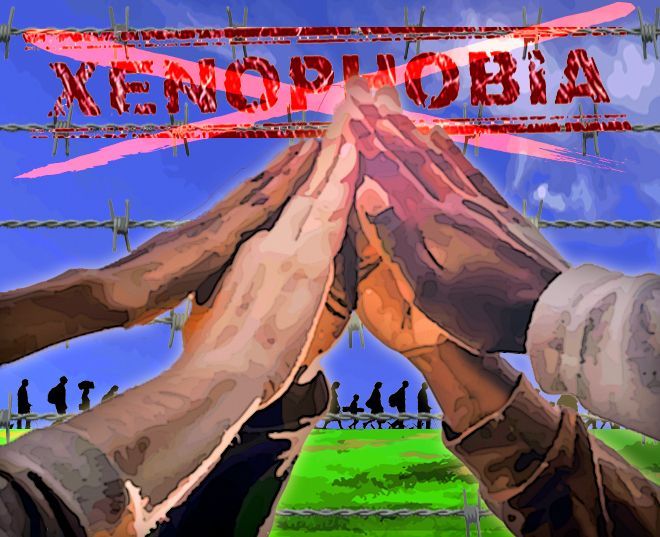
Helen Buckingham observed the following scene in Somerset, England, on “the timely subject of xenophobia.” Derived from the Greek words “xenos” (meaning stranger) and “phobos” (meaning fear), the subject became common parlance when the United Kingdom left the European Union in a backlash against an influx of immigrants.
our leafy green streets
increasingly blotted by
the cross of St. George
Baptized nearly 90 years ago in St. George’s Church in Ritterswalde, Upper Silesia, Horst Ludwig marked April 23 on a Christian calendar to celebrate the saint.
From the flea market
a clay paper weight: St. George
kicking the dragon
Providing an update on government policy in Athens, Greece, Foteini Georgakopoulou honored a patron deity of hospitality, guests and travelers.
in Xenius Zeus
refugees and migrants are now officially
fair game
Rupa Anand from New Delhi, India, mused while watering a split-leaf fern and a flower at home.
new construction--
a monstera struggles to climb
higher & higher
* * *
windowsill geraniums--
the desire to marry
within the community
In Venice, Italy, Luciana Moretto had this “flash of inspiration about xenophobia.”
his garden fence
keeps the marigold
from the marigold
Deftly writing from Imphal, India, Jagajit Salam cut his haiku into two distinct parts. Buck M. got yelled at in Bath, England. Helga Stania was all ears in Ettiswil, Switzerland.
border wall--
the gardener trims
a foreign shoot
* * *
Wisteria blooms
Hanging over garden wall
A neighbour complains
* * *
Unfriendliness
I’m silent and listen
to the robin
Gordana Vlasic took a bite in Oroslavje, Croatia.
red apples
one doesn’t seem to be
from the same orchard
Carlos lamented food supply disruption. Elizabeth Moura is hurting in East Taunton, Massachusetts. Jerome Berglund prayed for relief in New Orleans, Louisiana.
overripe olives
the migrant pickers
in holding cells
* * *
stifling heat
the dragonfly can hardly breathe
it hurts when children die
* * *
goddess of spring
and dawn: heat expands
across U.S.
Foreigners entering Japan as workers are culturally different from their Japanese hosts, but perhaps only to a degree that’s understandable with some thought. Nishieeta Daksh Singhvi from Kolkata, India, hides her innermost feelings in the light of day, but the sunset draws them out.
Brown skin hides
story of alienation
you’ll never see
* * *
Sun goes down
soft fulmination
homesickness
Teachers of children with international roots in Japan tried to counter tightening regulations on foreigners by recommending that parents “Don’t say it, don’t let others say it: Japanese First.” Ignatti described her hometown of Castellana Grotte, Italy.
xenophobia--
in my school classes
no one was a foreigner
* * *
abandoned farmhouse--
the gate creaks
in summer silence
Ian Willey attended a conference about introversion that focused on teachers of English in Japan, and he “was surprised and heartened to learn that more than a few of us teachers are introverts at heart. I’ve been one all my life.” He believes haikuists can relate to his acknowledgement that “deep down there’s that little groundhog in me that wants to run and hide whenever a shadow appears.”
abandoned burrow
my natural inclination
to run and hide
Tim Chamberlain played with his food in Tokyo. Mel Goldberg felt empty in Ajijic, Mexico. Vasile Moldovan advocated for a homebound senior in Bucharest, Romania.
eating alone--
mashed potato
Devil’s Mountain
* * *
sleeping alone
in the mountains
the emptiness
* * *
old and alone
she has no one to share
spring memories with
Loneliness is a sign of seeking social connections. Earl Livings sleepwalked in Melbourne, Australia.
black cat
follows the sun
sleeping
“On Love and Barley: Haiku of Basho” is a short collection of the master haikuist’s work translated by Lucien Stryk. The intriguing title was drawn from this poem penned in the spring of 1691: mugimeshi ni yatsururu koi ka neko no tsuma
The she cat,
so thin on love
and barley
Sagano loves cherry blossoms and baseball. She often pens poetry about the sakura growing close to her home. Even though he moved to Los Angeles, Shohei Ohtani still has her heart and she admires his Japanese language haiku, too.
hanami strolling
and MLB opening day
both scheduled early
Orihara suggested “experiencing life abroad is key to avoid hatred and fear of others.” As an example, she recalled backpacking into a remote village. Remarking that was likely the first time the children ever saw a Japanese traveler, “the kids just stared at us in silence for a while.”
throwing stones
at foreign travelers…
piercing stare
After a storm, Marek Printer picked up the broken pieces of a salt-shaker from under the kitchen table in Kielce, Poland. Samo Kreutz had almost boiled over in Ljubljana, Slovenia.
argument over
brushing the salt
from the table
* * *
swan song...
the kettle whistles
after our debate
Anand’s dreams were scuttled.
rejecting her daughter’s
foreign date--
mother’s eye roll
Stoianka Boianova left home.
a kiss on the doorstep
mom gives me flowers
for health on the road
An American expat residing in Bali, Indonesia, James Penha “imagines the voice of a migrant… of so many migrants.”
I have escaped hate
and abuse only to find
you despise me more
Aggressive deportation policies are changing minds in America. Stephen J. DeGuire kept rethinking in Los Angeles, California.
trash can full
of crumpled paper
one death poem
Poets often have no idea of the impression they’re making on readers. In this sense, haiku are sometimes delusional, and share false beliefs about an external reality despite evidence to the contrary. Xenia Tran will likely squirm through April 25, a patron saint’s day when black hairy insects with long dangly legs are supposed to take wing in Nairn, Scotland. An early pollinator for fruit trees, hawthorn bugs sluggishly fly around inoffensively eating nectar.
long hot summer
St. Mark’s flies hover
on the hillside
Ed Bremson spotted yellow camouflage in Raleigh, North Carolina.
spring morning
pollen-colored
butterfly
Carl Brennan intends to observe the April 29 anniversary of the liberation of the first Nazi concentration camp in Germany.
The crewcut next door
checking surveillance feeds...
old Dachau footage
-------------------------------------------------------------------------------------------------------------
Give your brain a boost by deciphering haiku at http://www.asahi.com/ajw/special/haiku/. The next issues of the Asahi Haikuist Network appear on May 1, 15 and 29. Readers are invited to send haiku about illusions, delusions, or hallucinations. Send haiku on a postcard to David McMurray at the International University of Kagoshima, Sakanoue 8-34-1, Kagoshima, 891-0197, Japan, or e-mail to <mcmurray@fka.att.ne.jp>.
* * *
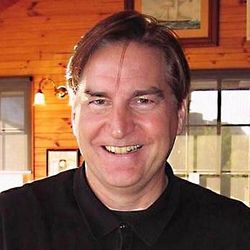
David McMurray has been writing the Asahi Haikuist Network column since April 1995, first for the Asahi Evening News. He is on the editorial board of the Red Moon Anthology of English-Language Haiku, columnist for the Haiku International Association, and is editor of Teaching Assistance, a column in The Language Teacher of the Japan Association for Language Teaching (JALT).
McMurray is professor of intercultural studies at The International University of Kagoshima where he lectures on international haiku. At the Graduate School he supervises students who research haiku. He is a correspondent school teacher of Haiku in English for the Asahi Culture Center in Tokyo.
McMurray judges haiku contests organized by The International University of Kagoshima, Ito En Oi Ocha, Asahi Culture Center, Matsuyama City, Polish Haiku Association, Ministry of Foreign Affairs, Seinan Jo Gakuin University, and Only One Tree.
McMurray’s award-winning books include: “Teaching and Learning Haiku in English” (2022); “Only One Tree Haiku, Music & Metaphor” (2015); “Canada Project Collected Essays & Poems” Vols. 1-8 (2013); and “Haiku in English as a Japanese Language” (2003).


No comments:
Post a Comment