some light to counter the dark start to 2026
New Year's Eve
moon shining on tinsel
Christmas tree wake
cricket/ from Cricket Formations, 1969
first snow a self still forming--nameless yet
--Fatma Zohra Habis (Algiers, Algeria)
* * *
rain sparkles
in the neighbours’ lights
New Year’s Eve
--Marie Derley (Ath, Belgium)
* * *
New Year’s Day…
again, I’ve missed
the morning mist
--Ed Bremson (Raleigh, North Carolina)
* * *
to the newborn
the fear of the unknown--
unknown mail address
--Masumi Orihara (Atsugi, Kanagawa)
* * *
temple bells--
I can hear
perfect circles
--Morgan Ophir (Sydney, Australia)
* * *
temple bell echoes fade--
starting the new year afresh
cleansed of the past
--John Richard Stephens (Maui, Hawaii)
* * *
another haiku
for the drawer--
dawn is breaking already
--Alexander Groth (Neuenkirchen, Germany)
* * *
waking up--
more tired than
when I went to bed
--Tim Chamberlain (Tokyo)
* * *
so youthful
in last night’s dream--
now the mirror
--Tim Dwyer (Bangor, Northern Ireland)
* * *
the sunrise
signs of recovery, but
no workers
--Junko Saeki (Tokyo)
------------------------------
FROM THE NOTEBOOK
------------------------------
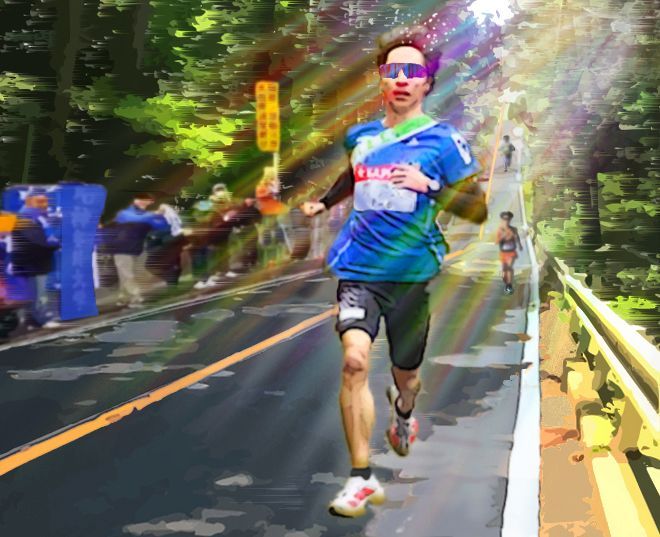
huff and puff
the finish line in sight
cheers of crowd echoing
--Dennis Lagura (Kobe, Hyogo)
The haikuist ran in a local marathon with students. Today, Jan. 2, runners line up for the Tokyo-Hakone Intercollegiate Ekiden relay race. The cherished New Year tradition that began as an extra-curricular pursuit in university, has become deeply embedded in Japan’s culture, including haiku. Kei Miyaji won the grand award at the 32nd Ito En Ocha Shinhaiku Contest for this entry.
Long-distance running
I don’t want to do it
Long-distance running
Ceo Ruairc tried to keep warm in Campbell River, British Columbia.
huddled together
all night in dense down jackets
vagrant chickadees
Steliana Cristina Voicu ran around her kitchen in Ploiesti, Romania.
New Year’s Eve...
the walnuts I still haven’t
cracked for the cake
Luciana Moretto read the morning mail in Venice, Italy.
New Year’s card
“Wish to be in Top 10”
then burned
Responding to a 5-word New Year’s promise, “work, work, work and work,” Saeki composed a 5-7-5 syllable suggestion about how to improve Japanese society.
adopt a Granny
visit and spend a few hours
holiday season
Tsanka Shishkova plotted a heavenly line of stepping stones from her hometown in Sofia, Bulgaria, to the extremely bright planet Jupiter to Sirius, the traditional New Year’s Star that links in turn to the Orion’s Belt constellation and beyond. Driving in Burien, Washington, Ron Scully picked up the trail of the glowing star that is visible all night long.
New Year’s star
step by step toward the end
of the universe
* * *
that summer’s song
recurs, Sirius outdrives
the shared moon
Joshua St. Claire paid homage to older married women by writing about a showy, short-lived purple perennial plant.
dame’s rocket
in its shadow
the world to come
Watching a televised game show in Pico Rivera, California, Jackie Chou whispered the answer so loud that her voice sounded like rustling leaves.
knowing the answer
the contestants don’t
susurrating leaves
During New Year’s in 1897, the master poet Masaoka Shiki playfully penned these homophonic words on the introduction page of his new notebook: Fukubikini kyusu o ete hokku ni kyusu
I won a teapot
in a raffle, and I’m at a loss
how to begin a poem
Bremson tried out his new teapot.
first cuppa…
waiting for the fog
to clear
John Pappas jumped into his old tin car in Boston, Massachusetts.
new year’s day
that rusting old
jalopy
Doc Sunday felt enriched by a silver-colored sea from a train window as it passed along a suspension bridge toward his home in Hiroshima.
midday train
Seto Inland Sea
island bridges
Charlotte Bird lives near the calcium and magnesium-rich Sonoran Desert in Phoenix, Arizona. These dissolved minerals can make tap water taste salty or bitter.
offered salt--
the ocean waxes
and reclaims
David Cox remarked on the first snowfall this year in Torquay, U.K., “I couldn’t help but think of the saddening Manhattan Project and the toxic rains after the Chernobyl disaster which fell over Europe.” An expensive steel shield was wrapped around the nuclear meltdown in the Ukraine to seal in radioactive and seal out wind and snow, however, drones from Russia recently pierced holes into that protective sarcophagus.
desert snowflakes…
the first fall in the
Jornado del Muerte
Shiki let his readers know he was struggling to make ends when he composed this line in his notebook that wins as much sympathy today as it did in 1897: Shinnenya mukashiyori kyusu nao kyusu
New Year comes,
and I become poorer
than before
Ivan Georgiev became indebted while watching the heavens over Gottingen, Germany.
stargazing
poetically accumulated
sleep debt
Daniela Misso looked up at the moon waxing over San Gemini, Italy, and wished “it will be a really good year when there are no more wars.” In Kathmandu, Nepal, Tejendra Sherchan was bathed in moonlight.
January moon
above the calm sea--
peace in my heart
* * *
waxing moon
monsoon clouds prepare
to give it a bath
In Rhinelander, Wisconsin, Brent Goodman named the zodiac sign for the supermoon rising tomorrow, Jan. 3.
moon in cancer
the drone wars
metastasize
Boryana Boteva wrote this eulogy in Sofia, Bulgaria.
his last dance
the only spectator
the moonlight
Marek Printer lay back on his bed and waited for the sun to rise in Kielce, Poland.
the bitter taste
of the first cigarette
before the shelling
In Baton Rouge, Louisiana, Ibrahim Nureni’s day began like every other day.
morning sun
grandma dips her toothbrush
into a salt cup
Ian Willey composed this Star Wars-themed haiku while lying comfortably in his futon at home in Takamatsu, Kagawa Prefecture. Stephens visited a shrine.
pre-dawn glow
a bird channeling
R2-D2
* * *
rising sun--
bowing before dawn
torii gate
Yutaka Kitajima chuckled when it was time to say farewell to visitors.
First snow on parting...
the infant won’t handover
the packet of salt
Feeling his age, Patrick Sweeney’s ears rang in the New Year.
a crying baby pauses
and begins to giggle...
the city bus arrives
Alan Summers reached for a swan-shaped hip flask of single malt Yoichi at a “local tiny bridge” in Wiltshire, England, “visited often by swans who insist on pausing me for a friendly tete-a-tete.”
whisky in the rain
the swan couple and cygnets
stop under the bridge
Horst Ludwig recalled running “from the approaching Soviets, at 6 in the morning.” It was his last time to ever hear “the bell sound of my home village in Silesia.” That bell rang for stillness. The haikuist recalls how “the entire village halted when the bell rang--workers paused, farmers bowed their heads, children stopped playing. It was a few minutes of respect, a daily reminder that life was more than labor. It shared a breath of peace.”
Eight years old then, I
remember looking up to
the church bell ringing
Marilyn Henighan attended church in Ottawa, Ontario.
hummingbirds
remained all year long
stained glass
Promising to compose “more joyful poetry soon” this new year, Cox began studying Italian future tense verbs via an online course. Practicing in The Hague, Netherlands, Maya Daneva studied the art of how to begin a business meeting in Japan.
vincero…
with no sleep he conquers
the future tense
* * *
fully focused...
holding with two hands
my business card
--------------------------------------------------------------------------------------------------------------
The next issues of the Asahi Haikuist Network appear Jan. 16 and 30. Readers are invited to send haiku for horses on fire or a hidden treasure on a postcard to David McMurray at the International University of Kagoshima, Sakanoue 8-34-1, Kagoshima, 891-0197, Japan, or e-mail to mcmurray@fka.att.ne.jp.
* * *
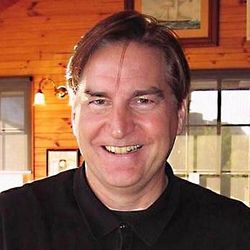
David McMurray has been writing the Asahi Haikuist Network column since April 1995, first for the Asahi Evening News. He is on the editorial board of the Red Moon Anthology of English-Language Haiku, columnist for the Haiku International Association, and is editor of Teaching Assistance, a column in The Language Teacher of the Japan Association for Language Teaching (JALT).
McMurray is professor of intercultural studies at The International University of Kagoshima where he lectures on international haiku. At the Graduate School he supervises students who research haiku. He is a correspondent school teacher of Haiku in English for the Asahi Culture Center in Tokyo.
McMurray judges haiku contests organized by The International University of Kagoshima, Ito En Oi Ocha, Asahi Culture Center, Matsuyama City, Polish Haiku Association, Ministry of Foreign Affairs, Seinan Jo Gakuin University, and Only One Tree.
McMurray’s award-winning books include: “Teaching and Learning Haiku in English” (2022); “Only One Tree Haiku, Music & Metaphor” (2015); “Canada Project Collected Essays & Poems” Vols. 1-8 (2013); and “Haiku in English as a Japanese Language” (2003).


No comments:
Post a Comment