Total Pageviews

Showing posts with label David Suzuki. Show all posts

Monday, 21 September 2026

Seniors Climate Caravans greet first day of Parliament/Patrick Connors poem


patrick connors


Instead of Bitterness

I will be grateful for my many blessings 
and the chance to share them with others.
I will choose peace and not be afraid
even when I am alone and vulnerable.
I will cry instead of being angry, and 
not hold on to every bad moment.
I will walk the way of softness.
 

A little while ago, we had Patricia Lane reach out to us about her involvement with the Seniors Climate Caravan, arranged by Seniors Climate Witness. On September 9th East and West Coast Climate Caravans started their journey to Ottawa, connecting with communities and climate supporters along the way.

Starting in Victoria, the Western Climate Caravan was led by David Suzuki in Vancouver on September 9, before travelling east through Kamloops, Calgary, Medicine Hat, Regina, Winnipeg, Thunder Bay, Sault Ste. Marie and Sudbury, arriving in Ottawa on September 18th. The Eastern Climate Caravan picked up folks in Nova Scotia (CBC Article on Nova Scotia Caravan), Quebec, and Ontario, before arriving in Ottawa.

The mission of Seniors’ Climate Witness is simple; they are bringing together seniors, people of faith, and allies in a national climate witness to call on the Government of Canada to reject new fossil fuel pipelines, uphold its climate commitments, respect Indigenous rights, and invest instead in a safe, clean and livable future for our children, grandchildren, and future generations.

The Seniors Climate Caravan will be outside at the opening of Parliament on September 21st and wrap up on September 24th, but there is still time to support them. Click below to see the schedule, and importantly, please consider donating to their cause; every bit helps cover the many costs of making this act of resistance happen.


David Suzuki on the way to Ottawa with members of the Seniors Climate Caravan and creator Michael Polanyi (Right).

We must protect the land for future generations. Thank you to all of the seniors who are doing their part for Canada.

Spread the word, and get involved!


Donate to Seniors Climate Caravan

https://seniorsclimatewitness.ca/


If any photos or images on this site are under copyright, please let us know, and we will provide appropriate credit. This content is used in accordance with applicable copyright laws, including “fair dealing” under Canadian law and “fair use” under Section 107 of the U.S. Copyright Act, for purposes such as criticism, comment, and news reporting.

The Resistance is a 100% reader-supported publication. If you enjoy the work as a free subscriber, we hope you’ll consider upgrading to a paid subscription. Thank you.

This post is public — feel free to share it.

Share

Thank you for reading Charlie Angus / The Resistance.

 
Like

Comment

Restack


© 2026 Charlie Angus
PO Box 74173, Ottawa RPO Beechwood, Ontario K1M 2H9
Unsubscribe

Get the appStart writing


Friday, 7 August 2026

More on super El Niño: David Suzuki

I received very similar warnings from both Charlie Angus and David Suzuki this morning about the threat of super El Niño. Decided to post both, while I usually post just one a day. 

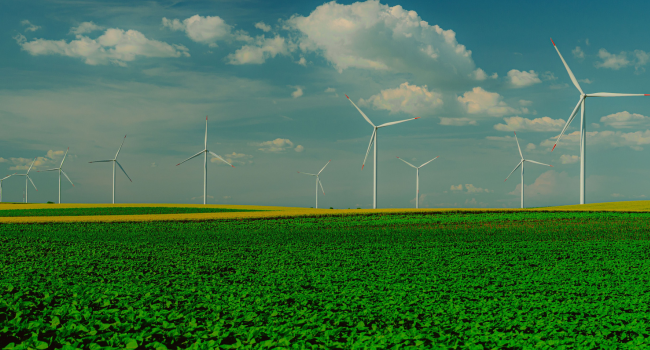
Wind turbine in a field.

Cognitive dissonance underlies oil and

 gas push

We’re experiencing a growing renewable energy revolution.

 It’s reducing pollution and related health care costs, spurring

 technological innovation, creating good jobs and boostin

 economies — and helping to slow the climate crisis.

At the same time, some people are suffering from varying

 degrees of cognitive dissonance — a conflict between knowledge

 or belief and behaviour. Unfortunately, many of them hold the reins of power.


The truth is inescapable: Communities in North America and Europe

 are choked with wildfire smoke, people are forced to flee their homes,

 some are dying from unbearable temperatures, others are facing

 food and water shortages from “extreme drought” and death and

 destruction from severe floods and intense storms. Entire towns

 are burning.

Although El Niño events are natural, studies show

 they’re likely made worse by global heating, which is

 causing ocean surface temperatures to rise.

Scientists worldwide have proven that these events — the increasingly

 lengthy and intense wildfire seasons, more devastating storms,

 growing water shortages and crop failures — wouldn’t be happening

 without the climate changes fuelled by burning coal, gas and oil

 and destroying carbon sinks such as forests and wetlands.

This year, it’s exacerbated by an intense El Niño cycle —

 when unusually warm surface waters from the Pacific Ocean

 flow along the western coast of South America, disrupting globa

 weather patterns. Although El Niño events are natural, studies

 show they’re likely made worse by global heating, which is

 causing ocean surface temperatures to rise.


The past 11 years have been the warmest on record. Scientists

 now say we’re nearing the point of no return, when so many

 tipping points will be passed that we’ll have a “hothouse Earth,”

 where human survival will become increasingly difficulty, and

 impossible in some tropical areas.


“It’s likely that global temperatures are [already] as warm as, or

 warmer than, at any point in the last 125,000 years and that climate

 change is advancing faster than many scientists predicted,”

 Christopher Wolf, a scientist at U.S.–based Terrestrial Ecosystems

 Research Associates, told the Guardian.

I feel sad for young people. We’ve failed them with our insatiable greed and ignorance about our place in nature.

Yet, here in Canada, our prime minister and premiers across the country are doubling down (literally, in Alberta) on fossil fuel development: pipelines, oilsands development, fracking for liquefied natural gas, export terminals to send our polluting, climate-altering fuels to other countries, where we can ignore their impacts — until they boomerang back in the form of more smoke and fire, drought, heat domes…

It’s worse in the United States, where the current administration denies what everyone can see for themselves, even without the incontrovertible scientific evidence. The government is pouring support into fossil fuels and putting the brakes on renewable energy development (as is Alberta’s).

And the president and his minions spout the most idiotic crap, such as blaming Canada for wildfires by not raking the forest floor! Forest management practices factor in, but the truth is, regardless of those practices, and whether a fire is sparked by lightning, arson or a carelessly tossed cigarette butt, fires are more likely to start, spread and become more intense as longer, hotter, dryer periods increase.

I feel sad for young people. We’ve failed them with our insatiable greed and ignorance about our place in nature. It’s moving to see so many out doing good, protesting, joining the environmental and social justice movements and educating themselves. But it shouldn’t be up to them. They should be having fun, going to school, learning about the range of human thought, enjoying life. We in the older generations caused the problems; we should be fixing them.

We can’t keep acting as if we have all the time in the world to resolve it. It’s time for change!

The solutions are there and are being employed worldwide — but not quickly enough. We must stop burning fossil fuels, not expanding production. Not only are we putting human and other life in jeopardy, we’re also missing out on tremendous economic opportunities. It’s in large part because our current economic system encourages waste, short-term profit and destructive policies.

It’s not too late to turn things around. But if we lock in fossil fuel development for decades to come with expanded oil and gas development and infrastructure such as pipelines and carbon capture facilities, it soon will be. And why? So greedy oil company executives can amass more obscene profits while most people struggle to pay for necessities like food and housing?

We know what the problem is. We can’t keep acting as if we have all the time in the world to resolve it. It’s time for change!

By David Suzuki, with contributions from David Suzuki Foundation Senior Writer and Editor Ian Hanington

Share on Facebook
 
Share on Bluesky

Support the David Suzuki Foundation

Your gift will help push for bold climate action, protect nature so it can sustain all life and create resilient communities that benefit everyone.


Saturday, 13 June 2026

Ways Forward from this Polycrisis: David Suzuki/Ian Hanington

 To view this email as a web page, click here


A protected area sign

Connected crises contain opportunities

 for a better world

The climate crisis is not simply an isolated technological challenge. It’s part

 of a much larger “polycrisis.” After all, everything is interconnected.


The magnitude of this “system disequilibrium,” as Canadian author, social

 scientist and Cascade Institute executive director Thomas Homer-Dixon

 calls it, can cause a sense of hopelessness, but it is resolvable —

 with major changes in the ways we conduct ourselves on this small planet.


That’s the message of a comprehensive new study. The World

 Inequality Lab’s “Global Justice Report: A Plan for Equality &

 Prosperity Within Planetary Boundaries” — by 45 authors using

 databases compiled by more than 200 researchers from around

 the world — states that “it is possible to reconcile planetary

 habitability and high well-being for all, but only if the transformation

 rests on three pillars simultaneously.”

This will require significantly altering the power structures

 that now govern our world and that are driving us toward calamity.

The pillars are rapid decarbonization of energy systems, a shift from

 overconsumption toward “sufficiency” (including reduced labour hours

 and raw materials use and large changes in food habits, land use and

 forest cover) and a “drastic reduction in inequality of income, wealth

 and power” between and within countries.


This will require significantly altering the power structures that now govern

 our world and that are driving us toward calamity. It would include “hefty

 wealth taxes on billionaires, sharp reductions in working hours, a change

 in diets and a shift of investment from materially intense sectors, such

 as industry and mining, to education and health,” the Guardian reports.


The majority of humans would benefit, as it would double the incomes

 of 89 per cent of the world’s population by 2100 and keep global heating

 below 2 C above the preindustrial average. It would also reduce the

 average workweek to about 2.5 days, increasing leisure time.


Wealth inequality would be sharply reduced, with the poorest half of

 humanity increasing its portion from two to 30 per cent, while the

 billionaire class would see its share fall from six to 0.05 per cent.


“Close to 90% of the world’s population would double their income

 between 2026 and 2100, and once leisure and a habitable planet

 are counted, more than 99% come out ahead,” WIL co-director and

 Paris School of Economics professor Thomas Piketty and others wrote in a Guardian article.

As people feel less economically secure, they support authoritarian leaders, but that then leads to a backlash against green policies, undermining efforts to reduce fossil fuel consumption.

Piketty says the ideology of people currently in power or rising in the

 United States and many other countries can’t deliver what most of humanity needs.


“At the end of the day we’ll have to come to this kind of cooperative

 redistribution of resources and power because the alternative will

 simply lead to disastrous outcomes both on the environment, on the

 climate, but also on social grounds,” he told the Guardian.


Homer-Dixon argues that, although the interrelated crises may

 seem dire, they also present opportunities. That requires

 understanding how they connect, and how feedback loops

 exacerbate the problems. For example, fossil fuel consumption

 leads to climate change, which produces economic costs. “As

 people feel less economically secure, they support authoritarian

 leaders, but that then leads to a backlash against green

 policies, undermining efforts to reduce fossil fuel consumption.”


The opportunity, he says, is that this “delegitimizes the existing way

 of doing stuff, the existing vested-interest stakeholders who are hunkered

 down and don’t want anything to change.”

What stands in the way is not technical impossibility but political choice and the hard but crucial work of building a coalition behind it.

The Cascade Institute and the WIL report attempt to understand the holistic

 nature of the polycrisis to find solutions. Given that one underlying cause

 is wealth hoarding and inequality, the backlash from the ultra-wealthy and

 their political backers will likely heat up. The “Global Justice Report” notes

 that average per capita gross national income worldwide would increase

 for almost everyone but, “The exception would be the mega-rich, who

 would be highly taxed because they are most responsible for the climate crisis.”


As well as taxing the overly affluent, the report recommends measures such

 as “a global justice fund to finance the energy transition and oversee an

 increase in education and healthcare spending” and “a world sovereign

 fund, which would rebalance global holdings of public and private wealth closer

 to proportions last seen in 1970.”


It concludes that a better, more equal world is materially possible. “What stands

 in the way is not technical impossibility but political choice and the hard but

 crucial work of building a coalition behind it.”

It’s a coalition we should all get behind.

By David Suzuki, with contributions from David Suzuki Foundation Senior Editor and Writer Ian Hanington

Share on Facebook
 
Share on Bluesky

Support the David Suzuki Foundation

Your gift will help push for bold climate action, protect nature so it can sustain all life and create resilient communities that benefit everyone.